


Eden Prairie Montessori Learning Blogs
Five Subtle Ways to Make Your Home More Montessori


5 Subtle Ways to Make Your Home More Montessori (Without a Full Makeover)...
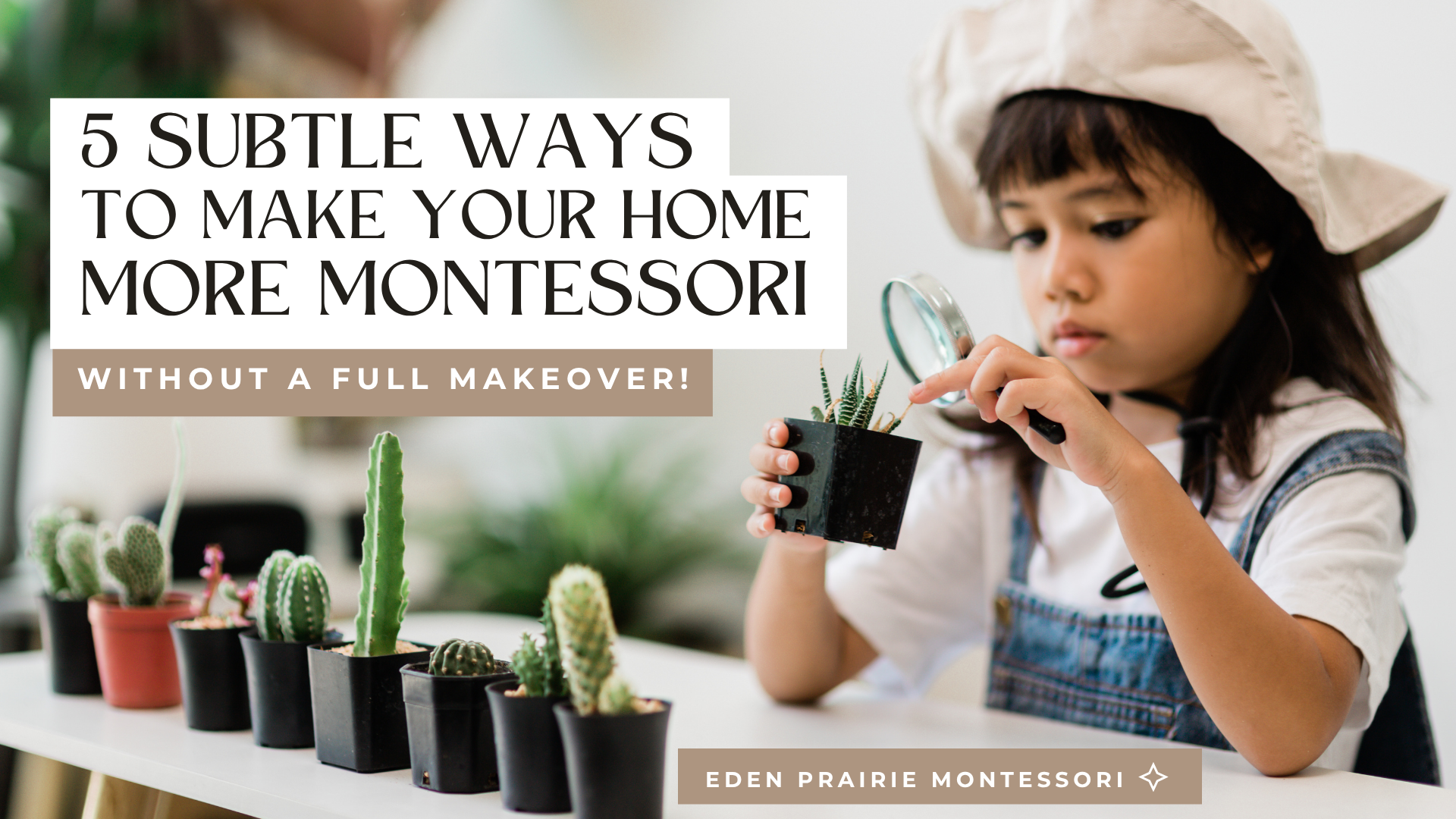
When parents first learn about Montessori education, they often picture beautifully curated classrooms with wooden materials, child-sized furniture and perfectly organized shelves. It can feel inspiring, but also a little overwhelming.
The good news? You don’t need to transform your entire home to bring Montessori principles
into your child’s everyday life.
At
Eden Prairie Montessori Learning Center, we often remind families that
Montessori is less about stuff and
more about mindset. Small, thoughtful changes at home can have a
big impact on your child’s independence and confidence.
Here are
five simple, realistic ways to create a more Montessori-inspired home- no renovation required!
1. Make Everyday Items Accessible to Your Child
One of the core ideas in Montessori is
independence. Children thrive when they can
do things for themselves without constantly asking for help.
Take a look around your home from your child’s perspective.
Are the things they need within reach?
This doesn’t mean redoing your entire kitchen or buying all new furniture.
It can be as simple as:
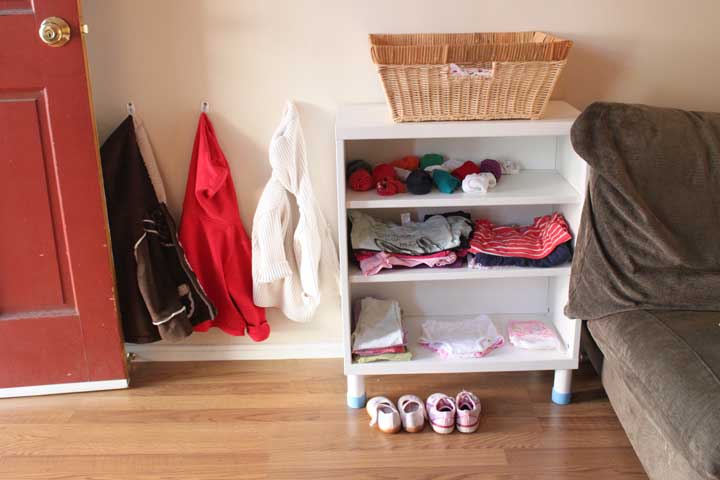
* Placing a few cups and plates in a lower cabinet
* Keeping a
small step stool near the sink
* Hanging coats or backpacks on low hooks
When children can access what they need, they
naturally begin to take initiative. Something as small as pouring their own water or putting on their shoes can
build confidence in powerful ways!
2. Simplify Toys (Without Getting Rid of Everything)
You don’t need to toss out all your child’s toys to
embrace Montessori. But you can be more
intentional about what’s available at any given time.
Instead of having every toy out all at once,
try reducing what’s on display. Too many options can overwhelm children and lead to shorter attention spans.
When there are fewer choices, children tend to focus longer and play more creatively.
A simple approach is to
store some toys away and rotate them every couple of weeks. When items are reintroduced, they often feel new again,
sparking fresh interest without buying anything new.
This small shift can bring calm and clarity to your child’s playtime~ and to your living space, too.
3. Create a Calm, Orderly Environment
Montessori environments are known for being well organized and intentional,
and there’s a reason for that.
Children are deeply influenced by their surroundings.
You don’t need a picture-perfect home. Instead,
aim for spaces that feel calm and predictable.
Start small:
* Use
baskets or trays to group similar items
* Keep surfaces relatively
uncluttered
* Return items to the
same place after use
Order helps children make sense of their world. When everything has a place, children are more likely to
take responsibility for their environment and clean up independently.
Even one organized shelf or corner can make a
meaningful difference.
4. Invite Your Child to Participate in Daily Life
In Montessori,
everyday activities are just as valuable as traditional “learning” tasks. Cooking, cleaning, and caring for the home all help children develop
coordination,
responsibility and a
sense of belonging.
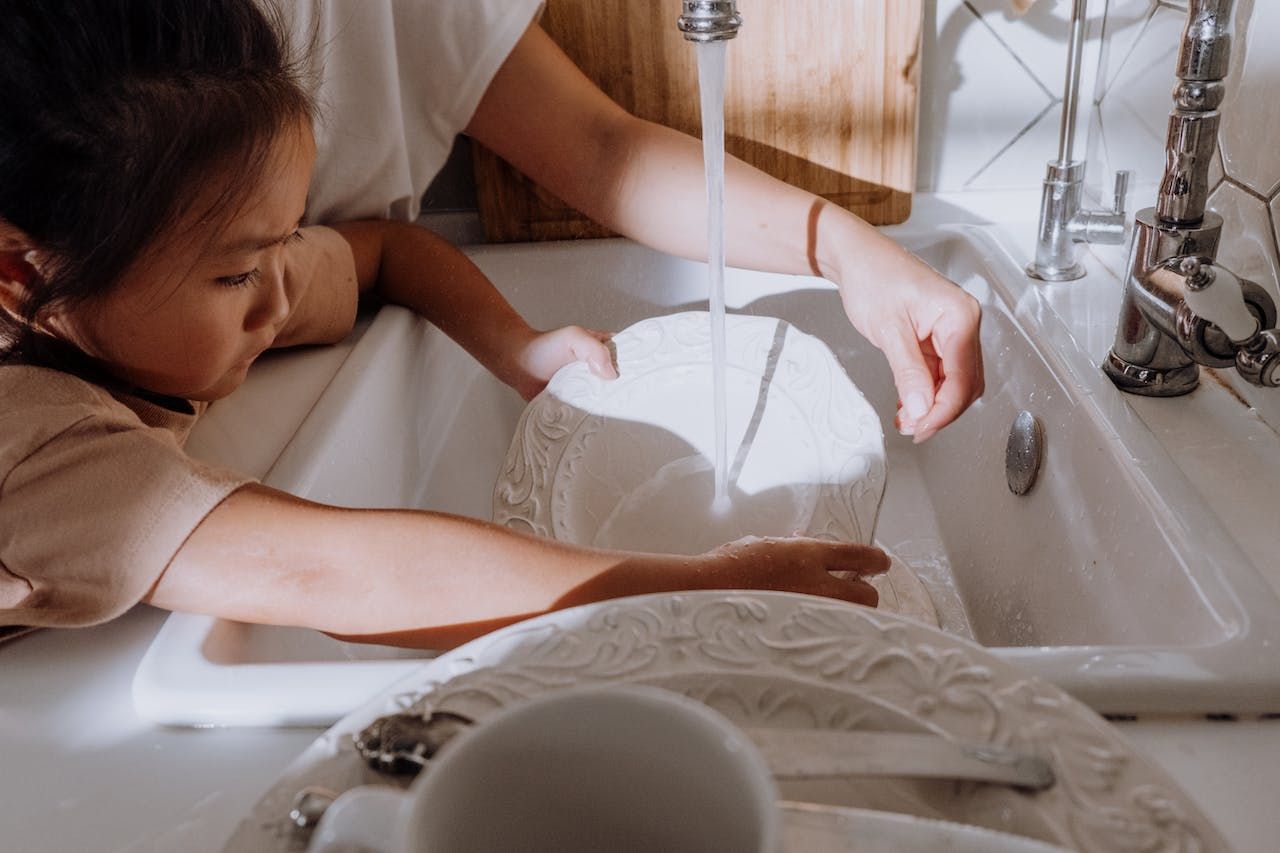
Rather than setting up special activities,
look for ways to include your child in what you’re already doing.
They can:
*
Help wash fruits and vegetables
*
Wipe
the
table after meals
*
Sort laundry or
carry small items
*
Water plants
These moments may seem simple, but they are
rich with learning. Children feel
capable and included when they contribute to real tasks and that
sense of purpose is incredibly powerful.
5. Follow Your Child’s Interests
One of the most important
Montessori principles is
observing and
following the child. Instead of directing all activities, we pay attention to what
naturally captures their interest.
At home, this might look like noticing:
* A
fascination with pouring and transferring
* A
love for building and stacking
*
Curiosity about nature, animals, or how things work
You don’t need elaborate setups to support these interests. Often, everyday household items are enough. A child interested in pouring might spend 20 minutes with two cups and some water. A child who loves sorting might happily organize buttons, socks, or utensils.
When children are engaged in something they’ve chosen, their
focus deepens and
meaningful learning happens naturally.
Bringing It All Together
Creating a Montessori-inspired home doesn’t require perfection. It doesn’t require expensive materials or a complete redesign.
It simply starts with
small, intentional changes:
* Making things
accessible
*
Reducing clutter
* Creating
order
* Including your child in
real life
* Paying
attention to what
excites them
These subtle shifts can transform
how your child experiences their environment and how they see themselves within it.
At
Eden Prairie Montessori Learning Center, we see every day how
capable children are when given the opportunity. With just a few adjustments at home, you can
nurture that same independence,
curiosity and
confidence in your child.
And the best part? You can start today, exactly where you are!
Contact Us